Case study · Artera · Design leadership
Shaping the work, not polishing it
How design moved from receiving requirements to helping write them.
- 5 + 3 Designers hired and promoted
- 12 Development teams supported
- 99% Design-system adoption
- 925 Research participants in two quarters
The challenge: design was hearing about it last.
Hospital systems and care teams needed to reach patients in ways that fit into the EHR and workflows they already used, without adding work for staff who were already stretched. Getting it right meant understanding current ways of working and pain points, but design wasn’t part of that discovery. As a result, users didn’t feel heard, and design decisions were based on assumptions.
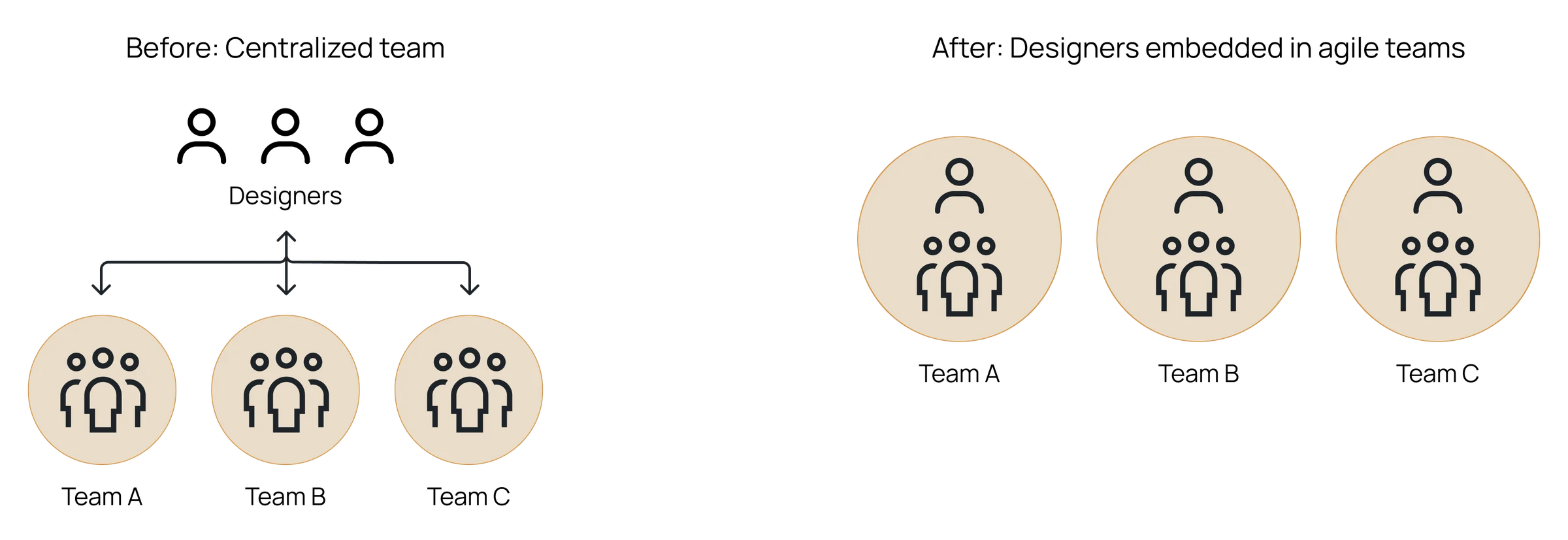
A centralized team structure made it worse. Requests arrived only after Product and Engineering had defined the requirements, so design was polishing UI instead of crafting experiences. I inherited three early-career designers, new to working with PMs and engineers in agile, supporting six or seven development teams, with more on the way. And with several disorganized pattern libraries and outdated front-end frameworks, the same UI had to be built separately in each one, so implementation work was duplicated and tech debt kept piling up.
The shift: from the end of the line into the room.
When I joined as Director of Product Design in January 2022, the fix wasn’t a new process diagram. It was where design sat. I moved designers out of a central queue and into the agile teams themselves, each one an equal partner alongside a PM and an engineering manager. Designers were in the room when problems were framed, not just when screens were due.
Embedding only works if the designers are ready for it and there are enough of them, and it had to keep working as the company added development teams. Everything else I did was in service of that one shift.
How I made it work.
The right people
I standardized hiring and onboarding so every new designer knew what good looked like from day one. I hired three senior designers to anchor the team alongside the three early-career designers I inherited, then added two more as the company grew. The promotions mattered as much as the hires: three designers grew into the partner role instead of being replaced around it. Regular design reviews gave a newly distributed team a steady place to share work, learn from each other, and keep quality consistent as we scaled.
Evidence, not opinion
I introduced discovery best practices, behavioral analytics, and regular user interviews. Within two quarters, research went from ad hoc to six studies and 925 participants, so designers could bring what they’d learned from care teams to the moment product decisions were being made.
One system instead of many
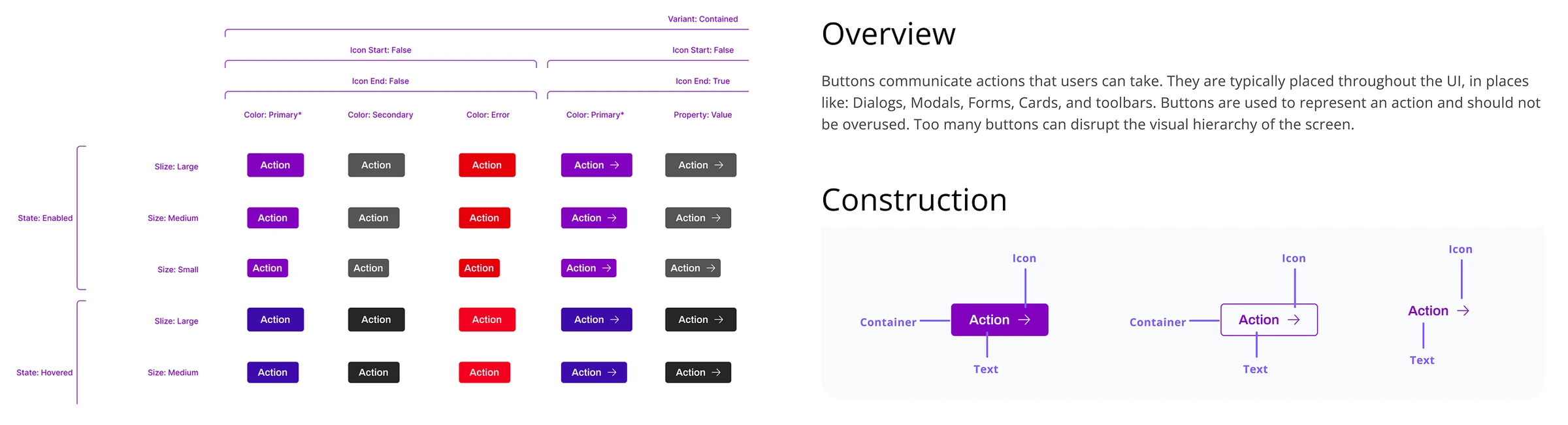
I led the work to replace the scattered libraries with a single, brand-aligned design system: a Figma component library for designers and a matching React library for engineering. It reached 99% adoption and ended the duplicate builds.
What changed.
I was promoted to Senior Director in January 2023, and design then earned a seat on the Product Council, where roadmap and priorities get decided. Research became part of how teams worked, not a special project. And as the company grew from six or seven development teams to twelve, the structure and practices we’d built scaled with it, so every team had a designer in the room.
Why this matters for early-stage teams
Roles and ways of working keep evolving, and so does what teams need from design. Designers’ superpower is crafting product experiences grounded in evidence, and that works best when they’re part of the conversation before decisions are made. At Artera, the turning point was putting design in the room as an equal partner and giving the team what it needed to earn that seat: the right people, a habit of design review, real research, and a shared system. In health tech, where patients, care teams, and the people who buy the product all need different things, having design in the room early matters even more. I now help early-stage health-tech teams build that kind of design function through fractional and interim engagements.
Next: Wayfinding, not branding
User research moved a navigation debate from opinion to evidence.